




You close the door, head to work, and that’s usually the last time you see your dog until you get back. But what dogs do when home alone can be very different from what you imagine.
Maybe your dog curls up on the couch and sleeps for hours. Maybe they move from room to room, bark at sounds outside, play with a favorite toy, or wait by the door for a few minutes. And sometimes, there may be things going on that you don’t notice when you’re home.
The tricky part? You don’t have to guess—you can watch.
A Lot of Dogs Simply Sleep
One of the first things you may discover when you monitor your dog is just how much they like to sleep when the house is quiet.
Your dog may have plenty of energy while you’re getting ready for work, but once you leave, the excitement can fade pretty quickly. A quiet home gives them a chance to settle down, rest, and sleep.
That doesn’t mean every dog will sleep all day. Some get up now and then, look around, switch sleeping spots, or grab a toy before settling down again.
Your dog’s alone-time routine may be much calmer than you expect.
💡 Did you know?
Dogs can spend up to 80% of a typical day sleeping or resting, although the amount varies with age, health, activity level, and the individual dog. So while you may picture your dog getting into mischief the second you leave, they may actually be perfectly happy taking a long nap.
Some Dogs Wait for You to Come Back
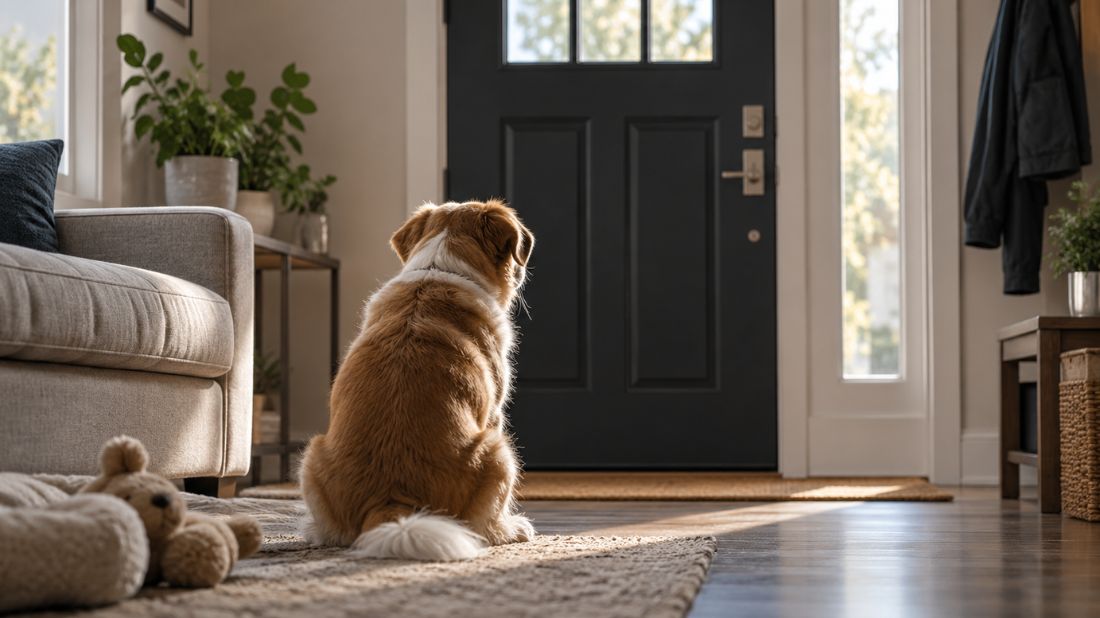
You may notice your dog spending time near the door, hallway, or another place associated with your return.
That doesn’t automatically mean they’re distressed. Some dogs prefer to stay close to where they expect you to come back. Others may spend a few minutes there and then wander off to do something else.
This is one reason dog home alone behavior is so interesting to observe. A quick look when you leave or return only shows you a tiny part of the story.
What happens during the hour in between can be completely different.
Playing, Exploring, and Keeping Themselves Busy
Some dogs are surprisingly good at entertaining themselves.
They might play with a toy, chew on something appropriate, investigate a new smell, look out the window, or move between their favorite spots around the house.
Other dogs aren’t particularly interested in playing once you’re gone.
There’s no single version of normal dog behavior when alone. Personality, age, routine, environment, and the individual dog’s comfort with being alone all play a part.
That’s why it’s more useful to learn your own dog’s habits than to assume they’ll behave like every other dog.

Look for Patterns, Not One-Off Moments
Seeing your dog get up and bark once doesn’t necessarily tell you much.
Seeing the same thing happen every afternoon for several days is much more useful.
You might notice that your dog:
- Sleeps most of the morning.
- Gets active when they hear something outside.
- Checks the front door around the time you usually come home.
- Plays for a few minutes and then settles down.
- Starts pacing shortly after you leave.
Patterns give you context. A single moment rarely does.
Barking, Pacing, or Other Signs Can Be Easy to Miss
Not every dog has a completely uneventful time alone.
Some dogs bark or howl. Others whine, pace, scratch at doors, chew things, have accidents indoors, or repeatedly move around the room. These behaviors can sometimes be linked to separation-related distress, although the same behavior can have other causes too.
And here’s the part many owners don’t realize: your dog doesn’t necessarily need to destroy the house for something to be wrong.
A dog may show subtler signs, such as panting, trembling, pacing, excessive salivation, or refusing food or a favorite treat while you’re away.
Some signs of separation-related behavior may only become apparent when a dog is left alone. That’s one reason occasional monitoring can be useful even when your dog seems perfectly fine when you’re home.
💡 Did you know?
The Royal Society for the Prevention of Cruelty to Animals (RSPCA) recommends checking on your dog from time to time when they are left alone because some signs of distress may not be obvious when you’re at home.
So, What Does My Dog Do When I Leave?
This is the question most owners really want answered.
The honest answer is: it depends on your dog.
Some dogs settle down almost immediately. Some sleep. And some explore the house, play, watch the window, or wait for their owner to return. Others may become vocal or restless once they’re alone.
And sometimes your dog may surprise you.
You may discover that the dog who follows you from room to room all evening barely notices that you’ve left. Or you may realize that the dog who always seems calm actually starts pacing a few minutes after the door closes.
That’s exactly why seeing your dog’s behavior for yourself can be so helpful.
You Don’t Have to Guess—You Can Watch
A simple way to learn more about what dogs do when home alone is to monitor your own dog for a few days.
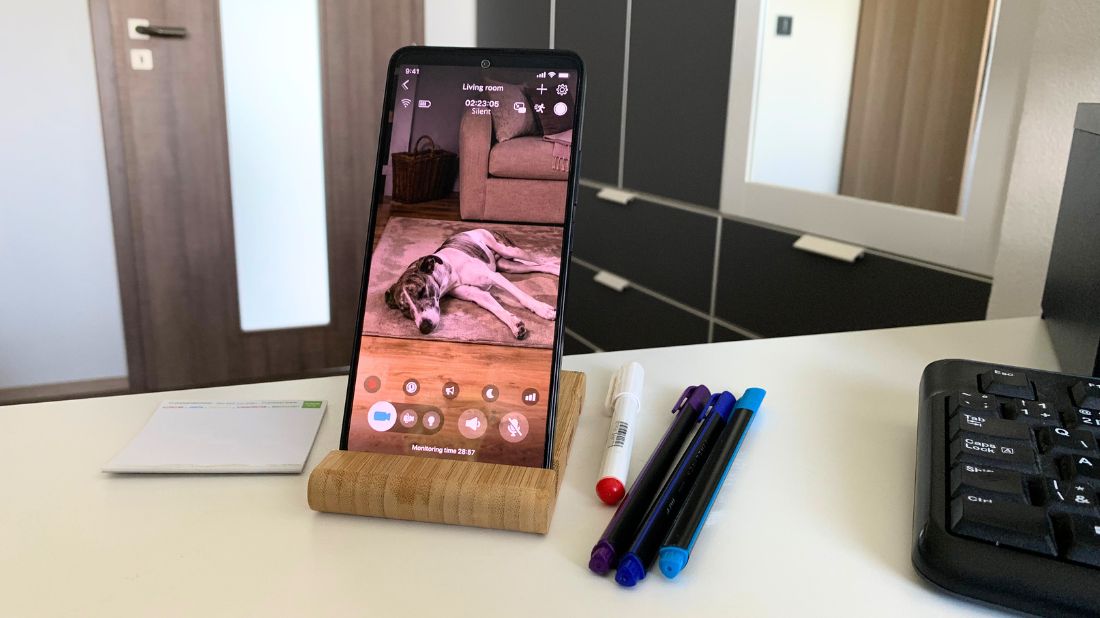
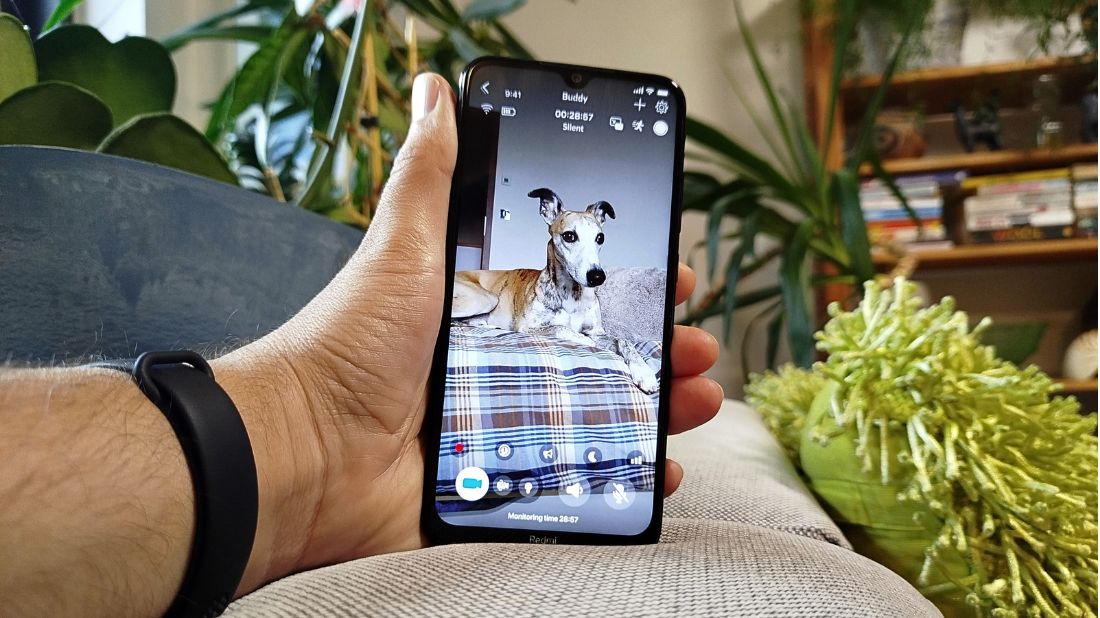
With the Buddy Dog Monitor app, you can use two compatible smartphones or tablets to watch your dog remotely. One device stays with your dog, while the other stays with you. Live video lets you see what’s happening, while two-way audio and motion and noise detection can give you more context when something catches your attention.
You don’t need to spend the whole day watching the screen.
Check in at different times instead. Look for what happens right after you leave, an hour later, and around the time you normally come home. After a few sessions, you may start to see a routine.
And that can be surprisingly reassuring.
Sometimes you’ll find out that your dog has a very peaceful little routine of their own.
Other times, you’ll notice something that deserves a closer look.
Either way, you’ll know more about what your dog actually does when you’re not home.
Final Thoughts
Every dog handles alone time differently. Some sleep, some explore, some play, and some may show signs that they’re having a harder time than you realized.
The only way to know what your dog is doing when you aren’t there is to observe them in that situation.
A little monitoring can turn a lot of guessing into something much more useful: a clearer picture of your dog’s everyday life.
FAQs
Is it okay if I leave my dog home alone for 8 hours and 5 days a week?
That depends on the individual dog, but eight hours alone regularly may be too long for many dogs, especially if they don’t have opportunities for exercise, toileting, stimulation, and human company. Puppies, older dogs, and dogs that struggle with being alone may need more frequent breaks. If your dog regularly spends a full workday alone, a midday walk, sitter, or other break can make a big difference.
How do dogs feel when we leave them home alone?
Dogs can react very differently. Some settle down and sleep, while others may become bored, restless, anxious, or distressed. No single emotional response applies to every dog. Watching your own dog’s behavior can give you a much clearer idea of how they actually experience alone time.
What do dogs without separation anxiety do when we’re not home?
Dogs that are comfortable being alone may sleep, rest, play, explore, look out the window, or move between different resting spots. Many settle into a quiet routine once their owner leaves. Their behavior may be much less dramatic than you expect.
Is it safe to leave my dog home alone for 9 hours?
Nine hours is a long time for many dogs to be left alone without a break. Their needs depend on factors such as age, health, toileting needs, temperament, and how comfortable they are with being alone. If your dog regularly needs to be alone for that long, consider arranging a break during the day.
 Scroll Up